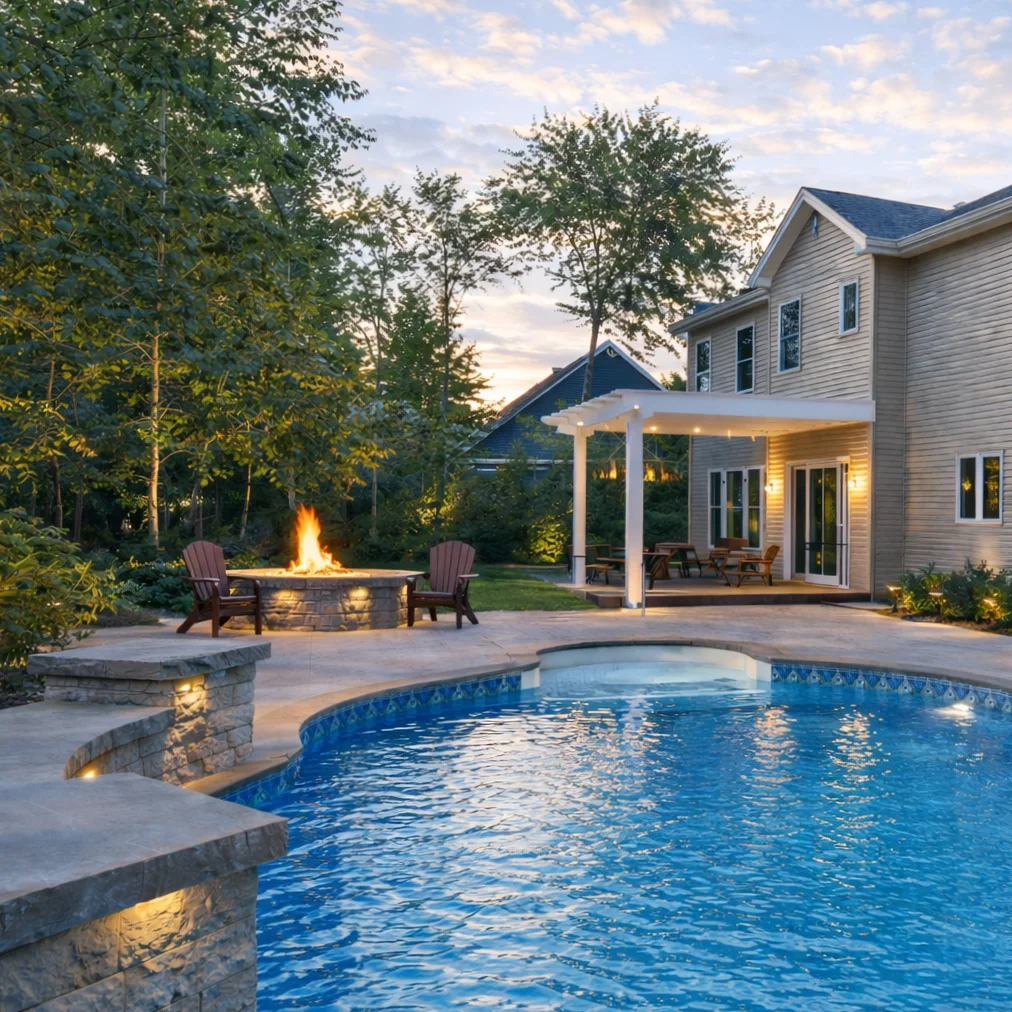
What Is Considered a Hardscape?
A Homeowner’s Guide to the Outdoor Features That Give a Yard Structure, Function, and Staying Power
There’s a reason this question gets searched so often.
“Hardscape” sounds like one of those industry words people nod at during a consultation and then quietly Google later in the car. It feels obvious until you actually try to define it. Is gravel hardscape? Is a driveway hardscape? What about a fire pit? A retaining wall? A pergola? And where, exactly, does landscaping end and hardscaping begin?
Here’s the clean answer: hardscape is the non-living, structural part of a landscape. In landscape planning, universities and extension programs commonly separate outdoor spaces into softscape—the living elements like trees and shrubs—and hardscape—the structural materials such as paving, fences, and walls.
But that definition is only the start.
Because in a great outdoor space, hardscape is not just “the hard stuff.” It is the part that gives your yard shape, movement, usefulness, drainage, stability, and that subtle feeling that everything belongs exactly where it should. It is the patio where dinner stretches longer than planned. The walkway that pulls you through the garden. The retaining wall that solves a slope instead of pretending it isn’t there. The outdoor kitchen that keeps the host in the conversation instead of trapped inside.
At Bollman Landscape, that philosophy shows up all over the site. The company describes hardscaping not as a side offering, but as the foundation of its business, with an emphasis on structure, flow, grading, drainage, base prep, and long-term performance—not just first-impression beauty. Bollman also positions itself as a family-owned, Triad-based design-build firm serving homeowners since 1995, with NC general contractor licensing and a focus on outdoor kitchens, paver patios, pools, retaining walls, and full outdoor living environments.
And honestly? That is the right lens for this topic.
Because the best hardscape is not decoration. It is decision-making in physical form.
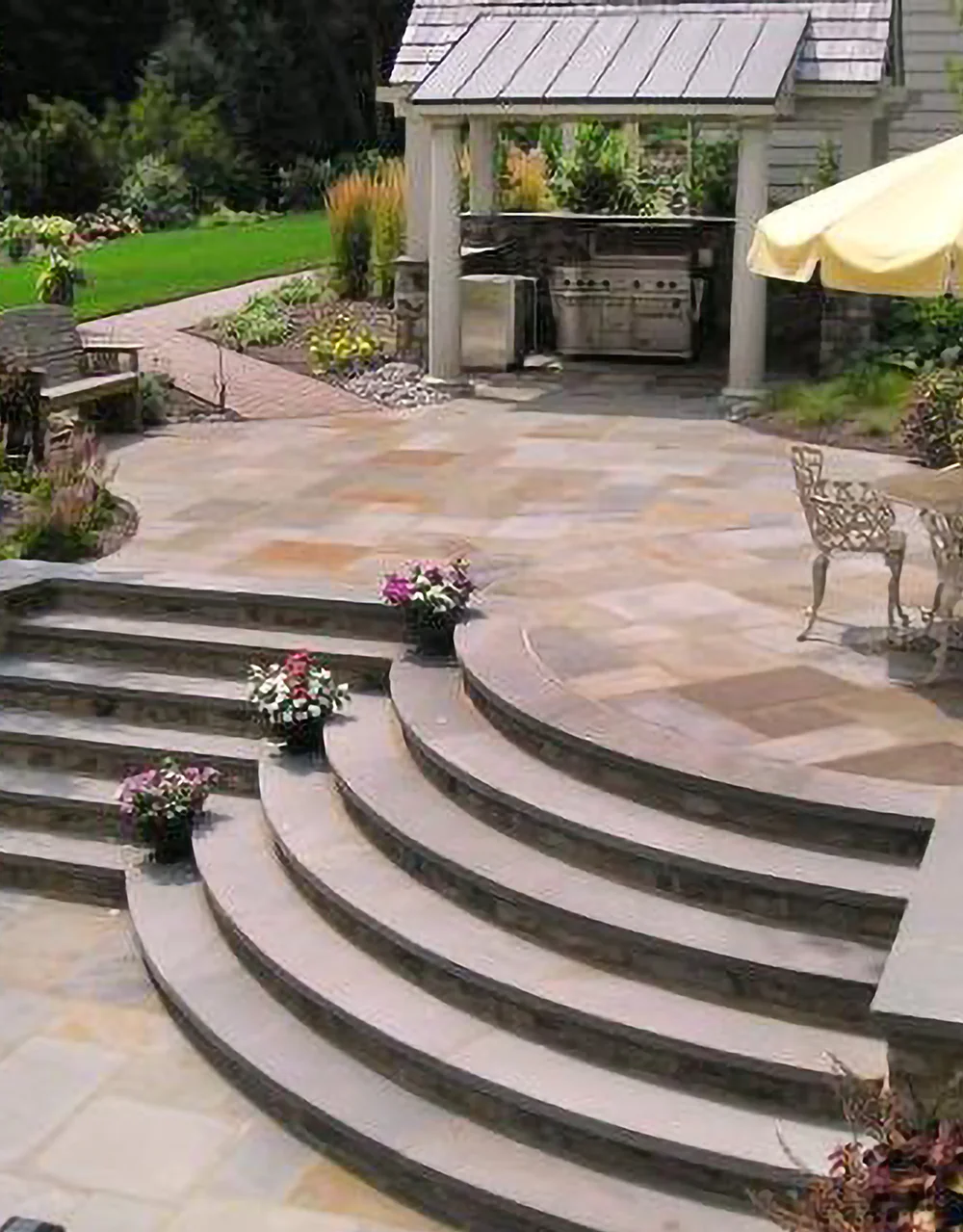
What Counts as a Hardscape?
If it is built, non-living, and meant to shape how the outdoor space works, it probably counts as hardscape.
That includes features like:
patios
walkways
driveways
retaining walls
seat walls
steps and stairs
pool decks
outdoor kitchens
fire pits and fireplaces
fountains and some water features
pergolas, arbors, and certain built structures
edging, coping, and masonry accents
gravel and decorative stone in many applications
Mississippi State University Extension describes hardscape landscape elements as built materials such as walkways, plazas, gazebos, retaining walls, trellises, fences, irrigation pipes, sculptures, arbors, lighting, and fountains. University of Missouri Extension similarly defines hardscape as structural materials such as paving, fences, and walls.
Bollman’s own service pages reinforce that broader definition. Their hardscaping work includes patios, walls, walkways, pool decks, fire features, outdoor kitchens, drainage-related construction, and larger outdoor living systems designed to feel cohesive with the house and the land.
So if you are asking, “What counts as a hardscape?” the easiest rule is this:
If it gives the yard structure instead of growth, it is probably hardscape.
What Is Defined as a Hardscape?
The formal definition is useful, but homeowners usually need the practical one.
A hardscape is any constructed element in your landscape that creates structure, solves a site need, or supports how the space is used. It can be decorative, but it almost always has a job to do.
A patio creates an outdoor room.
A walkway organizes circulation.
A retaining wall manages grade and pressure.
A fire feature creates a gathering point.
An outdoor kitchen makes the yard functional for real hosting, not just the fantasy version of it.
Bollman makes this point especially well on its patio and retaining wall pages. A patio, in their framing, is not just more square footage; it should improve circulation, work with the grade, drain properly, and relate naturally to the home. A retaining wall is not just a good-looking face; it must handle water movement, pressure, excavation, base preparation, and reinforcement correctly.
That distinction matters. A lot.
Because a hardscape feature is only as good as the unseen work underneath it.
What Is an Outdoor Hardscape?
An outdoor hardscape is simply a hardscape feature located outside the home as part of the landscape or outdoor living environment. In residential projects, that usually means the permanent, built pieces that make the backyard or front yard more usable.
Think of outdoor hardscape as the bones of outdoor living.
At Bollman, those bones include custom paver patios, retaining walls, pool environments, outdoor kitchens, steps, walls, fire features, and the site work that makes them perform over time. The company repeatedly emphasizes that projects should feel natural to the home, support family use, and be built with drainage, grading, and long-term durability in mind.
That phrase—outdoor living—is important here. Modern homeowners are not just asking for “landscaping.” They are asking for backyards that work like real extensions of the home. Research from the National Association of REALTORS® found that after outdoor remodeling projects, 68% of owners had a greater desire to be at home, 60% reported increased enjoyment, and the typical project earned a Joy Score of 9.7 out of 10.
That is not small. That is your yard becoming part of your life instead of a patch of responsibility behind the house.
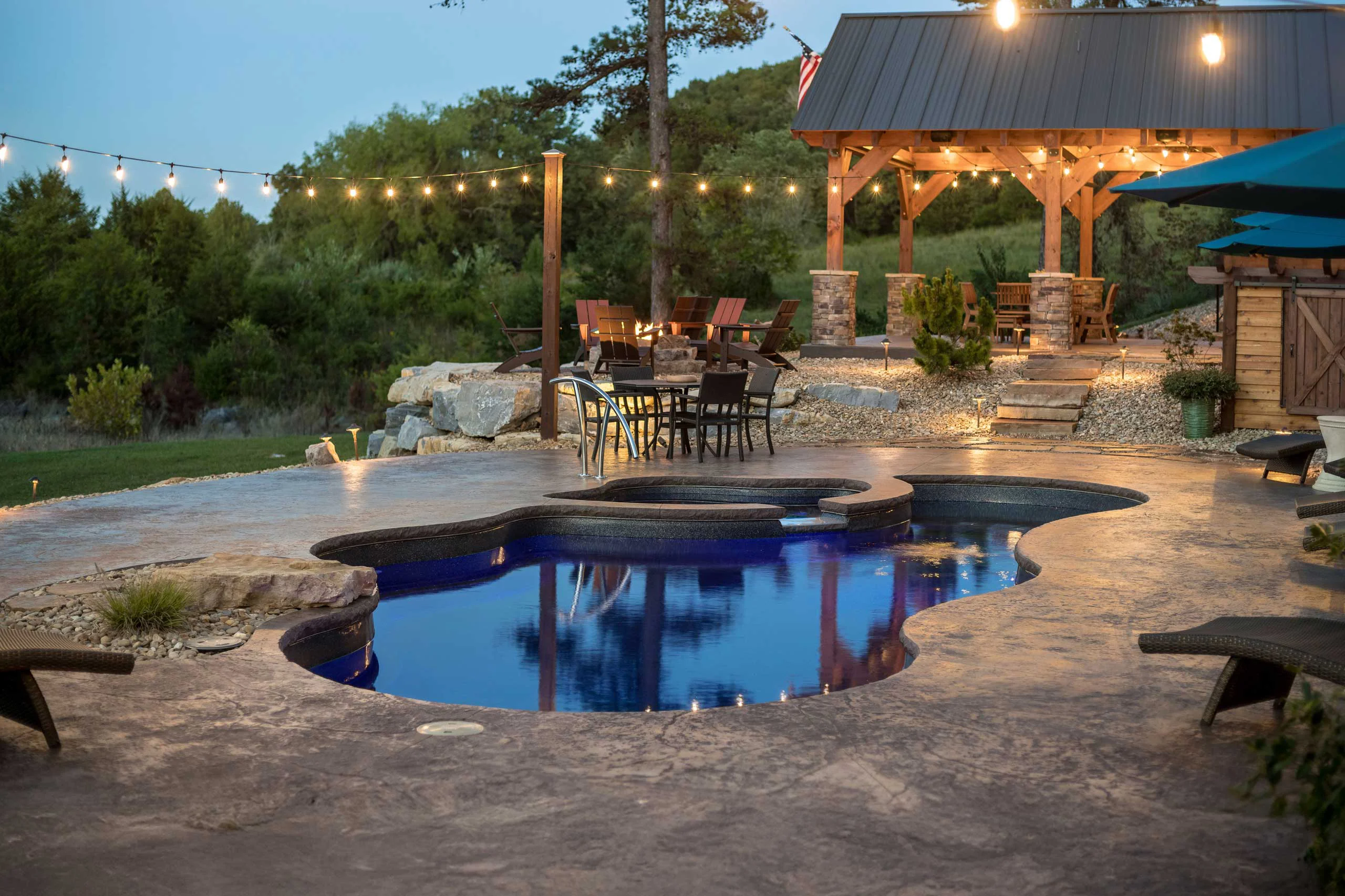
What Are Examples of Hardscapes?
Let’s make this concrete.
Here are some of the most common examples of hardscape in residential design:
1. Paver patios
These create the main outdoor floor of a space. Bollman describes them as durable, refined patio spaces that add structure, usability, and visual continuity, while also stressing that proper grading, drainage, and base prep matter as much as the finish.
2. Walkways and paths
These guide movement through the yard and connect spaces together. Extension guidance specifically includes walkways among hardscape elements.
3. Retaining walls
These manage slopes, stabilize grade, and protect usable space. Bollman notes that water movement, aggregate base prep, drainage stone, reinforcement, and sometimes engineering are critical to doing them correctly.
4. Outdoor kitchens
These are classic hardscape because they are permanent, built features integrated into the landscape. Bollman’s page frames them as projects involving layout, materials, surrounding hardscape, utilities, lighting, drainage, and construction—not just a grill island dropped onto a patio.
5. Fire pits and fireplaces
These create a natural focal point and gathering area. Bollman highlights fire features as common companions to patios and outdoor kitchens, while surveys from design and construction sources have consistently ranked fire features among popular outdoor elements.
6. Pool decks and coping
These shape how people move around and use the pool environment. Bollman includes pool decks and matching hardscape finishes as part of integrated patio planning.
7. Steps, treads, edging, and seat walls
These are the “small” hardscape features that often make a project feel finished and intentional rather than pieced together. Bollman specifically calls out stairs, architectural wall systems, edging, and seat wall caps in patio work.
8. Fences, trellises, pergolas, and arbors
These can blur the line between structure and landscape furnishing, but they are commonly treated as hardscape because they are built, fixed elements. University extension sources include fences, trellises, gazebos, and arbors in hardscape categories.
9. Gravel, decorative stone, and permeable paving systems
Yes—when used intentionally as a built surface or drainage solution, these count as hardscape. The EPA notes that permeable pavement systems can include interlocking pavers and other surfaces designed to let water infiltrate through to underlying soil and gravel, reducing runoff and helping filter pollutants.
Is Gravel Considered a Hardscape?
Yes, gravel is generally considered a hardscape material.
That surprises some people because gravel is loose, natural-looking, and often used around plants. But the defining issue is not whether the material is stone-like, formal, or “fancy.” The real question is whether it is a non-living landscape material used to create structure, drainage, or a finished surface.
So if gravel is being used for a path, patio area, edging band, drainage zone, or decorative base around a feature, it is hardscape.
If you want to get even more specific, gravel can also be part of the performance layer under hardscape. Bollman mentions aggregate base preparation and drainage stone behind retaining walls, and the EPA describes permeable pavement systems as working through surface layers and underlying soil and gravel.
In other words, gravel can be both the visible finish and the quiet workhorse underneath.
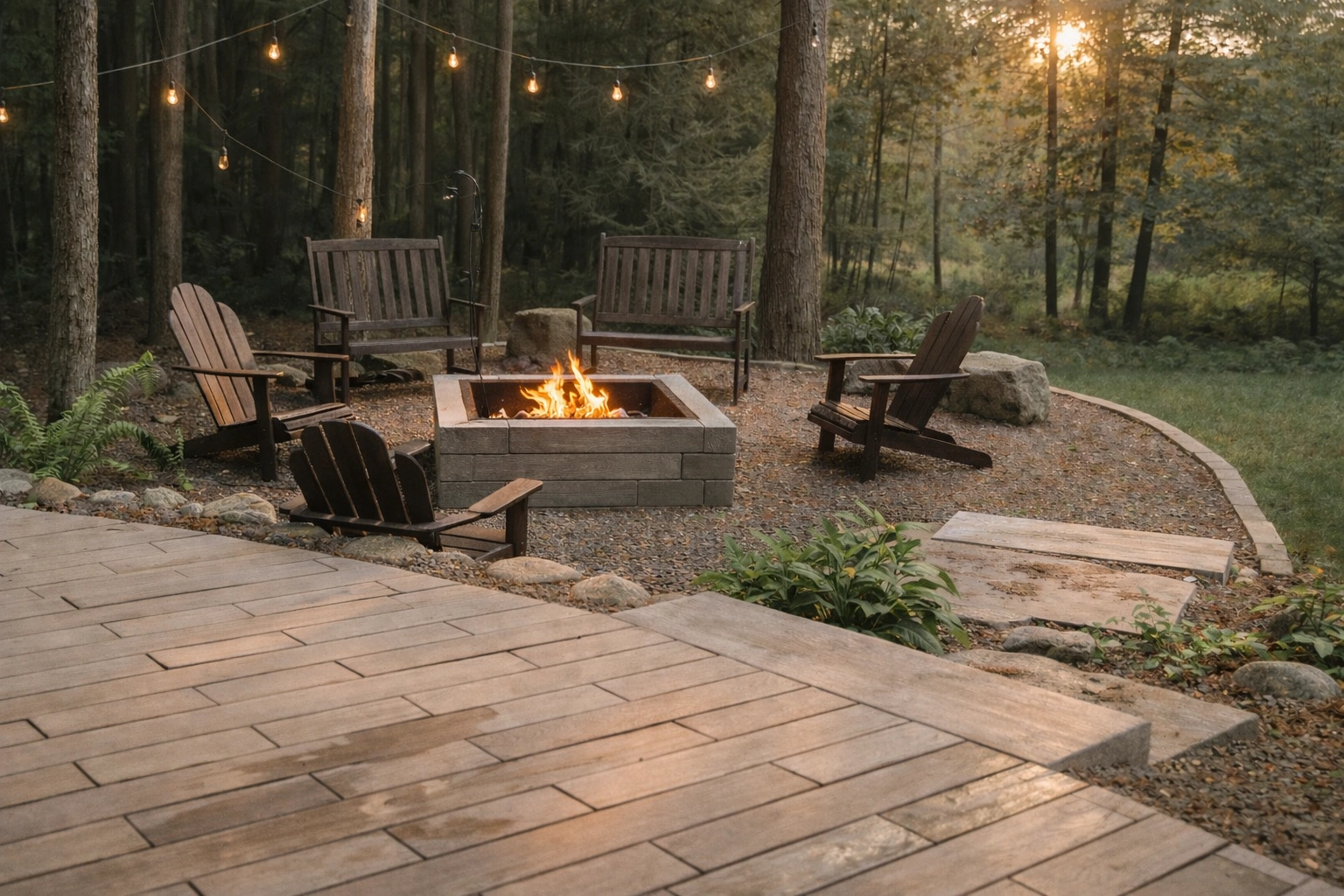
What Is Hardscape and Softscape?
This is the pair homeowners really need to understand.
A beautiful landscape almost never comes from hardscape alone or softscape alone. It comes from the relationship between the two.
Hardscape = the non-living structural elements
Softscape = the living horticultural elements
University of Missouri Extension spells it out clearly: softscape includes plant materials such as trees and shrubs, while hardscape includes structural materials such as paving, fences, and walls. Mississippi State University Extension uses a similar distinction, describing softscape as natural materials including plants, soils, mulches, and compost, while hardscape includes built elements like walkways, retaining walls, arbors, lighting, and fountains.
A helpful way to think about it:
Hardscape creates the rooms
Softscape softens the edges
Hardscape solves the practical
Softscape delivers the seasonal
Hardscape brings permanence
Softscape brings movement and change
Bollman’s website naturally lives in that balance. The company offers both landscaping and hardscaping, but the through-line is not “features.” It is creating spaces that feel personal to the family, natural to the home, and built for long-term use. That only works when hardscape and softscape are designed together rather than competing for attention.
What Is an Example of a Softscape?
A softscape is any living part of the landscape.
Examples include:
trees
shrubs
lawn or turf
flowers
groundcovers
ornamental grasses
planting beds
seasonal color
mulch and compost in many landscape contexts
soil-based planting areas
If hardscape is the architecture of the yard, softscape is the atmosphere.
A paver patio without planting can feel exposed.
A retaining wall without landscape layering can feel abrupt.
A walkway without softening can feel too rigid.
This is where design gets interesting. The best projects usually let hardscape handle the infrastructure and let softscape bring the emotion.
What Are the Four Types of Landscapes?
This question gets asked a lot, but here is the truth: there is not one single universal “official” set of four landscape types used everywhere in the industry. Different professionals use different classification systems depending on whether they are talking about ecology, design, maintenance, or architecture.
For homeowners planning a yard, the most useful four-part breakdown is this:
1. Hardscape
The built, structural elements—patios, walkways, walls, kitchens, fire features, and other permanent features.
2. Softscape
The living landscape—trees, shrubs, lawn, flowers, and planted areas.
3. Waterscape
Water-related features such as pools, fountains, ponds, waterfalls, and other water elements. Bollman’s broader service mix includes pool environments and water features as part of outdoor living.
4. Lighting and site amenities
The elements that make outdoor space more usable, comfortable, and complete—landscape lighting, seating walls, shade structures, built-in features, and accessories. Extension sources include lighting among hardscape-related built elements, and Bollman includes integrated lighting throughout its patio and kitchen planning.
Some professionals would classify lighting and amenities as part of hardscape, and that is fair. But for homeowners, this four-part framework is useful because it mirrors how outdoor spaces actually function: structure, planting, water, and usability.
The Top 9 Hardscape Features That Add the Most Function to a Yard
Not all hardscape punches at the same weight. Some features look nice. Others quietly change how you live at home.
Here are the nine that usually matter most:
1. A patio that creates a true outdoor room
This is the anchor. Without it, the backyard often feels like leftover land. With it, the yard becomes a destination.
2. Walkways that make movement feel obvious
People should not have to improvise a route through your property. Good circulation is one of those details you only notice when it is missing.
3. Retaining walls that turn difficult grade into usable space
A sloped yard can feel like a limitation until structure changes the game. Retaining walls can create safety, stability, and a lot more possibility. Bollman emphasizes that these projects are structural work first, aesthetic work second.
4. Outdoor kitchens that keep hosting outdoors
The magic of a good outdoor kitchen is not the appliance list. It is that the person cooking no longer disappears from the gathering. Bollman leans into exactly that idea on its outdoor kitchen page.
5. Fire features that create a natural gathering point
People circle flame. They just do. It is one of the oldest design truths we still respond to instinctively.
6. Poolside hardscape that makes the space usable, safe, and cohesive
A pool alone is not a finished environment. The deck, coping, circulation, and transitions determine whether the area feels polished or piecemeal.
7. Drainage-conscious paving and permeable systems
This is not always the glamorous answer, but it is one of the smartest. The EPA notes that permeable pavements can reduce runoff and help filter pollutants, making them worth considering on the right site.
8. Steps, edges, and transitions that finish the project properly
These details make the difference between “installed” and “designed.”
9. Seat walls and built-in features that increase usability
When hardscape provides places to sit, gather, or lean into the space, it stops being just construction and starts acting like hospitality.
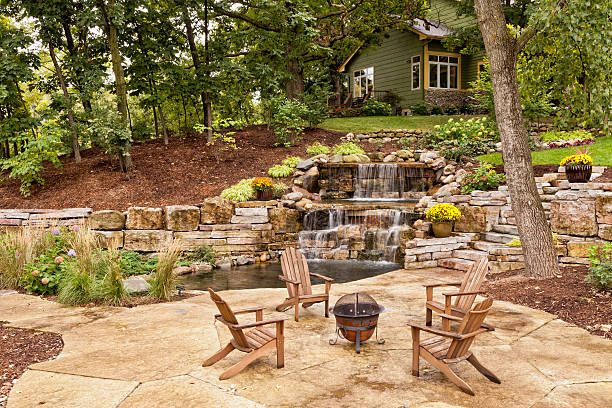
Why Hardscape Matters More Than People Think
Here is where this stops being a vocabulary lesson and becomes a homeowner decision.
Hardscape matters because it affects how the property functions, not just how it photographs.
The National Association of REALTORS® outdoor remodeling research found that homeowners most often cited beauty and aesthetics, better functionality and livability, and durable, long-lasting results as the biggest outcomes of outdoor projects.
That tracks.
A well-designed hardscape can:
make a yard easier to use
improve drainage and stormwater performance
stabilize slopes and prevent failure
create safer movement through the site
support entertaining and family life
make the home feel larger and more complete
reduce the “unfinished” feeling many properties quietly have
And yes, it can support value conversations too. In the 2025 Cost vs. Value Report for Greensboro, the national average backyard patio project carried a job cost of $51,454, with an estimated resale value of $23,672, or 46% cost recouped; the same report also shows strong local interest in outdoor-focused project categories. That does not mean every hardscape decision should be made for resale alone—it should not—but it does show that outdoor improvements are serious, measurable investments.
More importantly, homeowners do not pursue these projects only for future buyers. They pursue them because they want to enjoy where they live now. The NALP/RISE survey found 69% of respondents value their yards as places to relax, unwind, and entertain, and 95% say it is important for their yards to appear well-maintained.
That is the emotional heart of hardscape. It creates a yard you actually use.
The Most Common Mistake Homeowners Make When Thinking About Hardscape
They think in features instead of systems.
They ask:
“Should we add a patio?”
“Should we do a fire pit?”
“Should we build an outdoor kitchen?”
Those are not bad questions. They are just incomplete.
A better question is:
How should this property work?
Because a patio affects drainage.
A retaining wall affects grading.
An outdoor kitchen affects utilities, circulation, adjacent paving, and where people gather.
A fire feature affects seating patterns and safety clearances.
A pool deck affects transitions, coping, and the relationship between structure and planting.
Bollman’s site is unusually clear on this. Across the patio, retaining wall, and outdoor kitchen pages, the company repeatedly ties layout decisions to the home, the grade, drainage, utilities, circulation, long-term performance, and the way the family will use the space.
That is the difference between installing a feature and building a place.
So, What Is Considered a Hardscape?
Let’s bring it home.
A hardscape is any non-living, built element in the landscape that adds structure, usability, stability, or definition to an outdoor space. Patios, walkways, retaining walls, fire features, outdoor kitchens, pool decks, steps, walls, fencing, pergolas, gravel surfaces, and many water-related structures all fall under that umbrella.
And if you want the real-world version:
Hardscape is the part of your yard that turns outdoor space into outdoor living.
It is the reason the yard finally flows.
The reason the slope stops being a problem.
The reason dinner moves outside.
The reason people stay longer.
The reason the backyard starts to feel like part of the house instead of what happens behind it.
That idea aligns perfectly with how Bollman Landscape presents its work: thoughtful design, quality craftsmanship, build integrity, and spaces meant to hold up for years to come. Bollman serves the Piedmont Triad as a family-owned design-build firm with a strong focus on patios, retaining walls, outdoor kitchens, pools, and full outdoor living environments shaped around the house, the land, and the family using them.
And honestly, that is the best definition of hardscape I know:
Not just what is built.
What makes the space belong.