“Never compromise the integrity of the sub-base.” - Fred Bollman
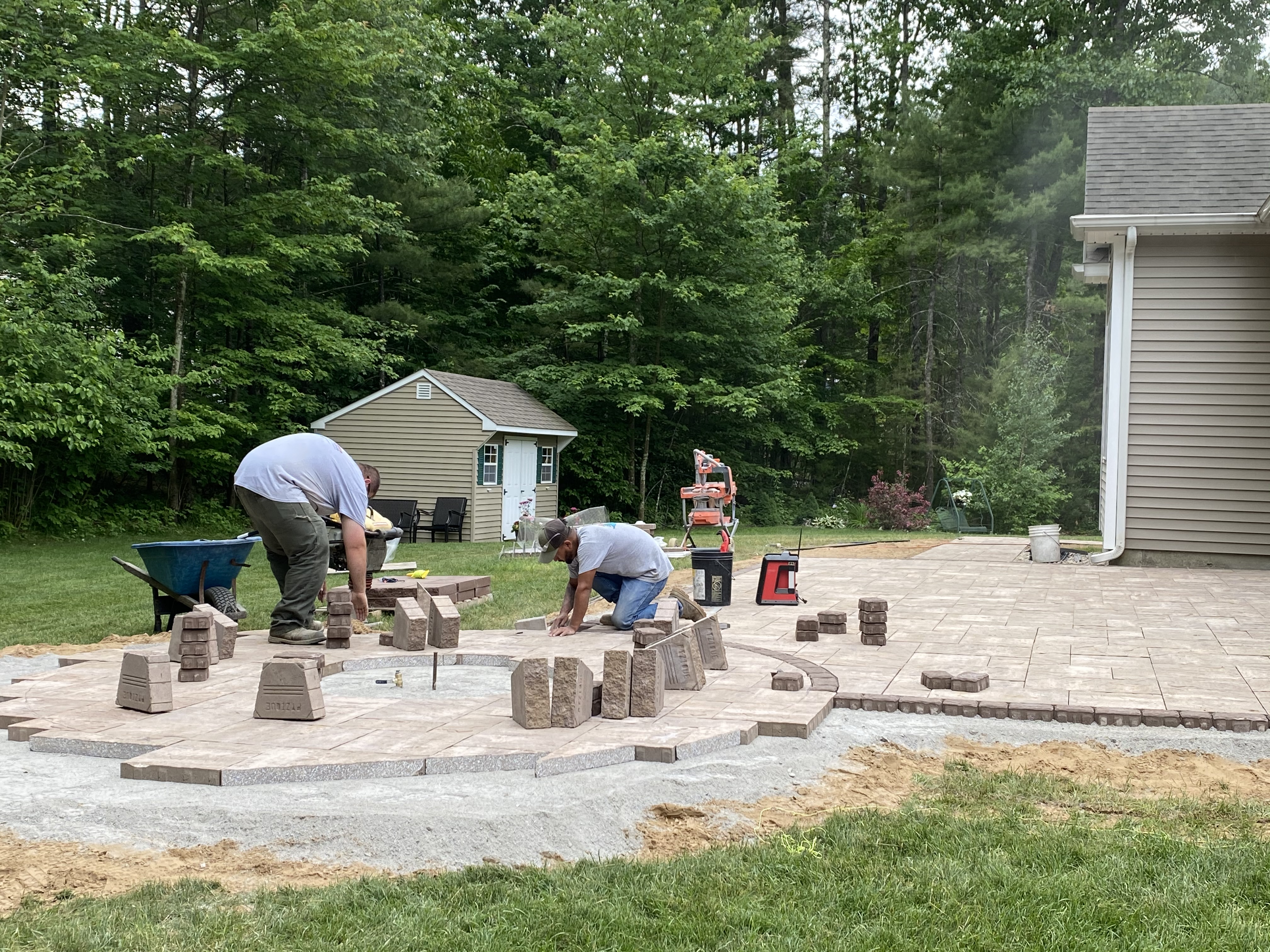
A beautiful hardscape can steal the show on day one. But the part that decides whether it still performs ten, fifteen, or twenty years from now is the part nobody posts on Instagram: what’s underneath.
There are two ways to build a hardscape.
The first way is to build for the reveal: the final walkthrough, the twilight photos, the moment the homeowner steps outside and says, wow. It is fast, surface-driven, and dangerously easy to fake for a little while.
The second way is to build for the future: for the third freeze-thaw cycle, for the tenth summer thunderstorm, for the settling pressure of time, gravity, water, and use. That kind of work demands excavation discipline, drainage planning, compaction, base preparation, material judgment, and the kind of construction integrity most people will never see once the project is complete.
"Never compromise the integrity of the sub-base."
That idea is more than a construction note. At Bollman Landscape, it is a philosophy. Because the truth is simple: in hardscaping, what you don’t see is often what matters most.
A patio that shifts. A retaining wall that bows. Pool decking that settles. Steps that move. Water that collects where it should not. Most outdoor failures do not start at the surface. They start below it, in rushed prep, poor drainage, underbuilt support, or installation choices made by someone betting that the homeowner will not know the difference until it is too late.
Bollman Landscape has built its reputation by doing the opposite. The company’s site says it plainly: extraordinary results come from more than surface-level style. They come from planning, structural integrity, drainage expertise, material performance, code awareness, and a build process that respects the home as much as the finished result.
The expensive problems almost always begin underground
A homeowner usually does not call for help because a project looked imperfect on day one. They call because something is moving, cracking, settling, leaning, pooling, or failing long after the installer has disappeared.
That is exactly why the sub-base matters so much. The sub-base is the structural support system beneath the visible finish. It is the part that helps manage loads, resist settlement, support drainage, and keep a hardscape behaving like a system instead of a collection of attractive materials laid on dirt.
Industry guidance is remarkably consistent on this point. The Concrete Masonry & Hardscapes Association notes that for interlocking concrete pavements, the surface of the compacted base should be smooth within a maximum tolerance of plus or minus 3/8 inch over a 10-foot straightedge, and it distinguishes common 60 mm pavers for pedestrian and limited vehicular use from thicker 80 mm pavers for streets and industrial conditions. That is not decorative fussiness. That is structural precision.
In other words: permanence is not a vibe. It is a standard.
Here’s the real issue: if the base is wrong, the whole project is already negotiating with failure. Maybe not this season. Maybe not next season. But sooner than it should.
Beauty is the invitation. Integrity is the reason it lasts.
Bollman’s website captures this tension better than most: “Pretty is easy. Permanent is harder. We do both.” That line works because it tells the truth. There is no shortage of contractors who can make a patio look polished for the handoff photos. The difference is whether they understand the way land, water, structure, and time actually behave.
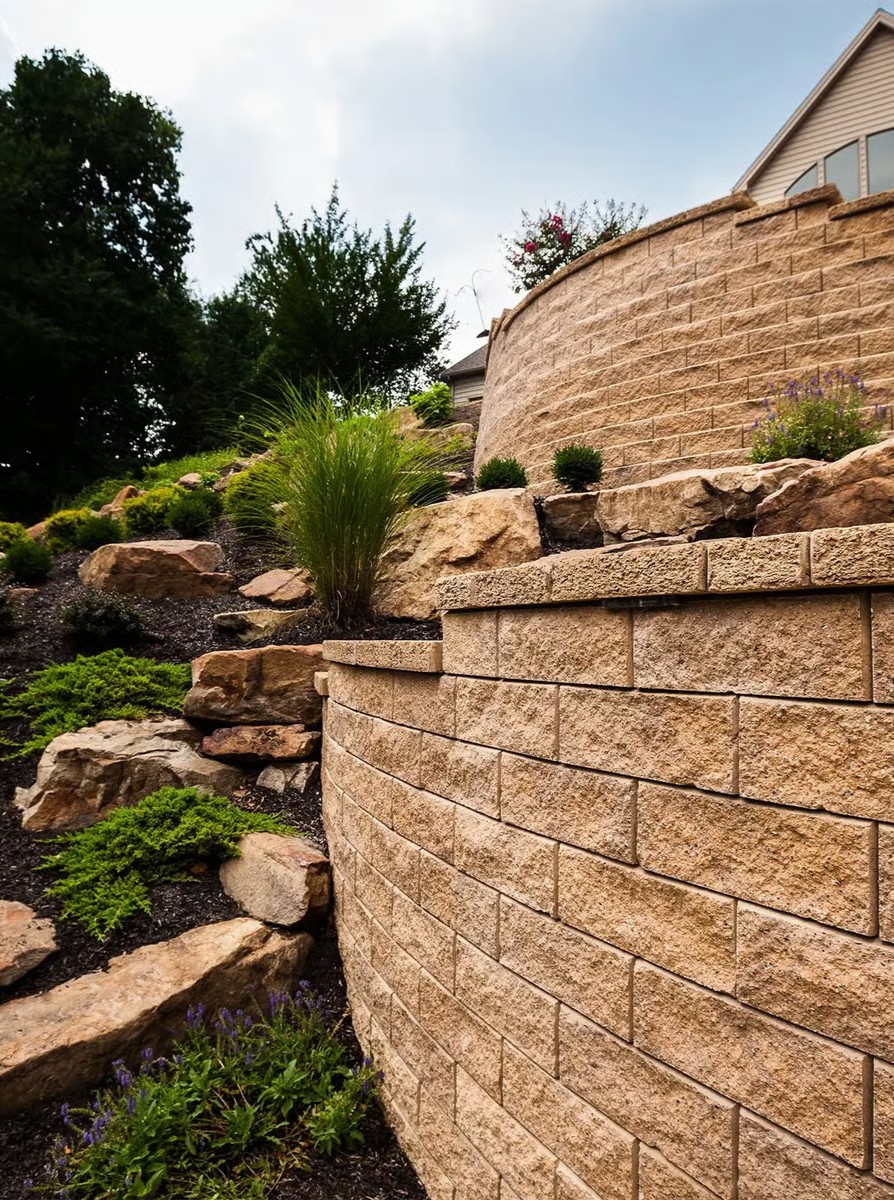
Retaining walls are a perfect example. A wall can look clean from the front and still be failing behind it. Bollman says exactly that on its retaining wall page, emphasizing that water movement, base preparation, reinforcement, drainage stone, pipe-to-daylight planning, engineering, and permitting are what separate a durable wall from a future liability. CMHA guidance reinforces the same principle: retaining wall design depends on soil, loads, geometry, drainage, and compaction, and inspection criteria commonly reference compacted retained soil meeting specified densities or at least 95 percent of standard Proctor density.
This is where Bollman’s perspective becomes especially valuable. As the firm is sometimes brought in to evaluate failures and testify in legal matters involving hardscapes, retaining walls, and pools, the team sees the downside of shortcuts up close. That vantage point matters. It means the company is not guessing about what goes wrong in the field. It has seen the anatomy of failure after the fact.
And failure is rarely glamorous. It is usually boring in the most expensive way possible: bad grading, insufficient excavation, weak compaction, no real drainage plan, wrong materials for the load, or an installer who prioritized appearance over structure.
Why homeowners should care more than they think
Outdoor living is not a frivolous investment anymore. It has become a real extension of the home, and the market reflects that. In the National Association of Realtors’ 2023 Remodeling Impact Report: Outdoor Features, 68 percent of owners said remodeling gave them a greater desire to be at home, 60 percent reported increased enjoyment, and the typical Joy Score across outdoor projects was 9.7 out of 10.
A new patio specifically earned a Joy Score of 9.9, while an in-ground pool addition scored a perfect 10 in that report.
That matters because people are not investing in hardscapes simply to fill a backyard with stone. They are investing in where dinner happens, where kids run barefoot, where the family ends the night, where grandkids remember summers. Bollman’s homepage understands that emotional layer. Their work is not sold as square footage. It is sold as a setting for life.
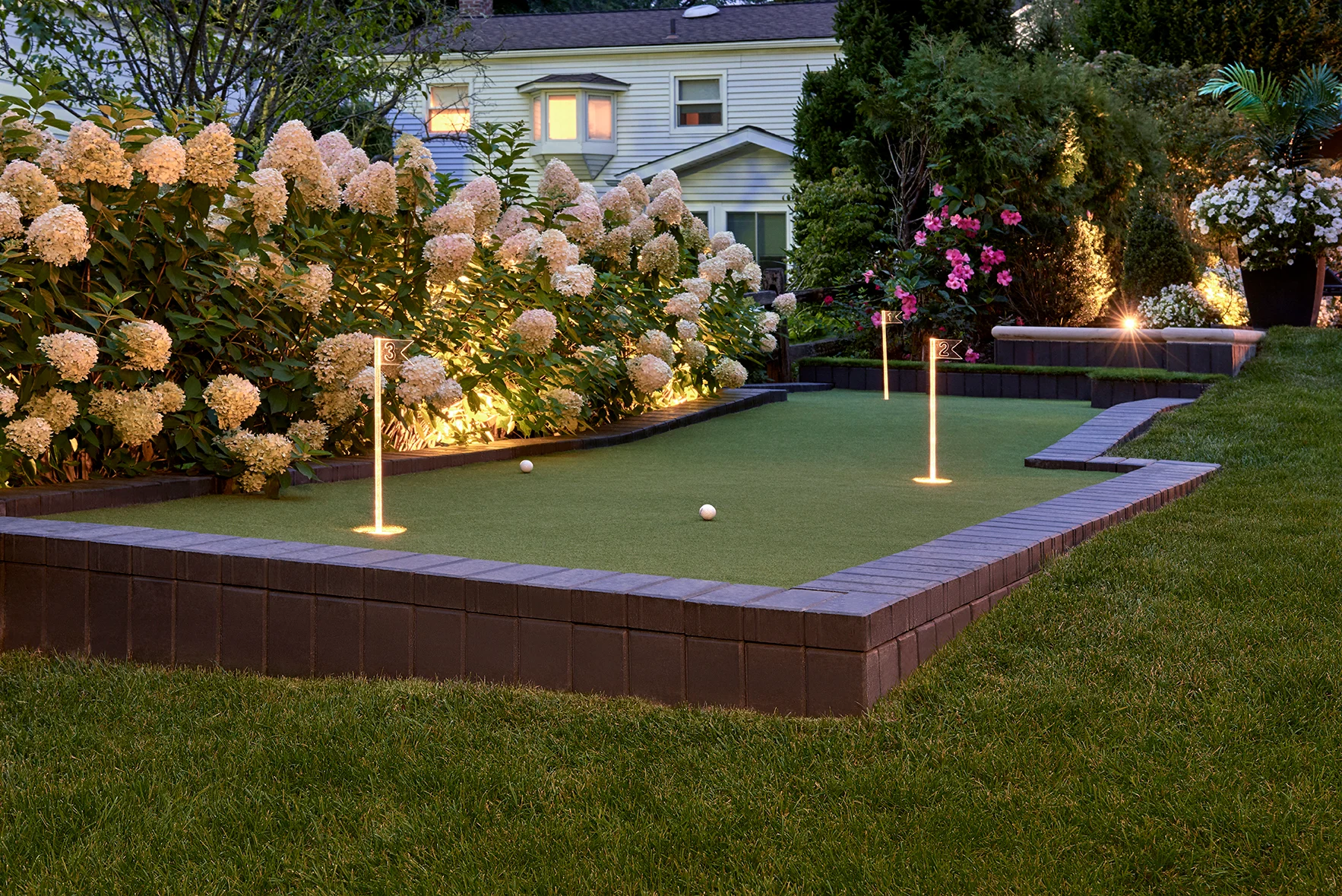
But that is exactly why structural integrity matters even more. A high-joy investment becomes a low-grade headache fast when it starts moving. The emotional return only lasts if the physical build does.
NAR’s outdoor remodeling data also shows that buyers and homeowners attach real value to outdoor improvements. The report estimated 59 percent cost recovery for a new patio, 56 percent for an in-ground pool addition, and 100 percent for an overall landscape upgrade and outdoor kitchen in its representative scenarios. So yes, outdoor living can be meaningful lifestyle value. But the durability question sits underneath the value conversation. A project that fails early is not just disappointing. It is financially reckless.
What Bollman gets right
Spend enough time on the Bollman site and a pattern appears. The company keeps returning to the same words: flow, grade, drainage, structural preparation, technical care, certified installation, licensed construction expertise, and long-term performance. That repetition is not filler. It is the strategy.
On the patio page, Bollman talks about spaces built “from the ground up,” and notes that a patio still has to drain properly, hold its shape, and feel right in relation to the home. On the pool page, the team emphasizes that placement, circulation, retaining walls, drainage, and patio work have to be considered together so the finished space works as one environment. On the hardscaping page, the promise is “technical groundwork done right.” Across the site, the message is consistent: good design is inseparable from good construction.
That is the kind of positioning homeowners should trust, because it speaks to causes, not cosmetics.
The Top 10 things you need to know before hiring anyone to build a hardscape
Ask what happens below the surface. If the conversation stays on paver style, color, and layout, you are only hearing half the job. Ask about excavation depth, subgrade prep, aggregate base, compaction methods, and drainage strategy.
Demand a real drainage plan. Water is patient, ruthless, and undefeated. It will expose every shortcut eventually. A good contractor should explain where water goes, how it moves, and how the build protects against saturation and erosion.
Know that tolerances matter. CMHA guidance does not call for base tolerances within ±3/8 inch over 10 feet for fun. It does it because small inaccuracies below become visible failures above.
Match the material to the load. Pedestrian patios, driveways, pool surrounds, steps, and structural walls do not all play by the same rules. Thickness, strength, reinforcement, and support conditions should fit actual use—not wishful thinking.
Retaining walls are engineering problems wearing nice clothes. If your site has slope, pressure, or drainage challenges, the wall cannot just be a decorative face. Ask about tieback reinforcement, drainage aggregate, discharge points, engineering, and permitting where required.
Compaction is not optional. In segmental retaining wall guidance, inspection commonly looks for retained soil compacted to specified densities or a minimum of 95 percent standard Proctor density. Translation: “packed enough” is not a professional standard.
Choose a builder who understands the entire site. The best hardscapes are not dropped into a yard; they are integrated with the home, circulation, grade transitions, drainage, and future use patterns.
Premium materials do not rescue poor installation. Even excellent pavers and block systems cannot out-perform a bad base. Great products installed poorly still fail.
Licensed expertise changes the outcome. Bollman’s status as an NC Licensed General Contractor matters because structural judgment is often what separates “looks good” from “is good.”
Ask how the project should perform in 10 years. This single question filters out the pretenders. The right builder will talk about movement, drainage, seasonal cycles, maintenance, and long-term behavior—not just the reveal.
The hidden luxury is confidence
There is a certain kind of luxury people rarely talk about in outdoor construction. It is not the imported stone. Not the custom fire feature. Not the pool glowing at golden hour.
It is confidence.
Confidence that the patio is not going to settle by the third year. Confidence that the wall is actually retaining. Confidence that the deck around the pool is supported correctly. Confidence that the drainage plan was not improvised in the field. Confidence that someone thought beyond the photo set.
That is what Bollman sells at its best: not just outdoor beauty, but outdoor peace of mind.
Build once. Build right. Build for the years you can’t see yet.
Homeowners do not remember every construction detail after a project is complete. They remember how the space made life feel. Easier. Richer. More connected. More used. More lived in.
But the only way a hardscape earns that memory over time is by being built with integrity beneath the finish.
That is the wisdom inside Fred Bollman’s quote. Never compromise the integrity of the sub-base. It sounds like a technical principle because it is one. But it is also something bigger: a standard for how serious builders think. Do the invisible work with care. Respect the forces that act on the project after you leave. Build what lasts, not just what lands.
Anyone can sell a beautiful backyard. The better question is: who is building one that will still be beautiful after years of rain, heat, use, gravity, and time?
That is where Bollman Landscape makes its case.
Not because the company talks the loudest.
Because it builds from the ground up.